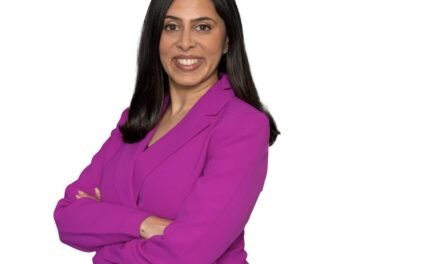
EspañolWhen Claudia Perez-Favela, a mom of three in California, skilled irregular intervals and heavy bleeding, she was involved that these may very well be signs of most cancers.She knew there was a historical past of reproductive most cancers in her household, however she could not see the physician instantly as a result of she was uninsured. After she acquired medical insurance, she tried to arrange an appointment with a gynecologist, however there have been a restricted variety of suppliers in her city, and he or she needed to wait a number of extra months to be seen.After she lastly noticed a healthcare supplier and had a number of assessments completed, Perez-Favela mentioned she was identified with cervical dysplasia (a precancerous situation the place irregular cells develop on the cervix) from an aggressive pressure of human papillomavirus (HPV). Due to her household historical past and the dysplasia analysis, Perez-Favela had a hysterectomy.Perez-Favela mentioned accessing medical care is difficult in rural areas. “Preventative screenings are essential. However in small cities there aren’t quite a lot of docs and specialists — and the wait instances for getting an appointment may be a number of months. If there had been any additional delays in seeing the physician, my situation might have developed into one thing a lot worse.”Perez-Favela will not be alone.Healthcare deserts current challenges for preventive careHealthcare deserts — geographical areas the place there may be restricted entry to medical care — affect thousands and thousands of People. Restricted medical amenities, monetary hardship and a scarcity of medical insurance and transportation to medical appointments compound the issue.Most cancers prevention screenings can be a big problem in rural areas. The Facilities for Illness Management and Prevention reviews that almost 93% of cervical cancers are preventable with Pap and HPV assessments and HPV vaccinations. However for rural sufferers with restricted entry to screenings, there may be severe ramifications — together with greater demise charges from preventable cancers. “Offering care in rural communities comes with distinctive challenges. Many sufferers stay important distances from clinics or hospitals, which means preventive care (Pap assessments and HPV testing) is usually delayed or skipped altogether. Transportation limitations, restricted appointment availability and fewer suppliers in these areas make it tough for sufferers to get well timed screenings,” mentioned Michael Schifano, D.O., a board-certified OB-GYN at Heartland Ladies’s Healthcare of Advantia, in Illinois. Hospital closures and Medicaid exclusions affect rural communitiesiStock.com/WackerhausenExperts report that a number of components inside the final decade — hospital closures, funds cuts, lack of specialists and post-pandemic staffing shortages — have made issues a lot worse in rural areas.Obstetric and gynecological care has been notably impacted — 267 rural hospitals stopped offering obstetric care between 2011 and 2021 — and almost 100 rural hospitals decreased companies or shut down, impacting over 16 million folks, prior to now decade. “The scarcity of OB-GYNs limits each screening and prevention. With out sufficient suppliers, sufferers not solely miss routine Pap and HPV assessments but in addition alternatives to obtain HPV vaccination, which is a confirmed technique to stop cervical most cancers earlier than it begins,” Schifano mentioned.
Marginalized communities expertise healthcare disparities at greater ratesResearchers on the College of Chicago discovered that hospital closures disproportionately affect Black communities. Rural Black ladies are additionally at elevated threat for cervical most cancers. Analysis exhibits that Black ladies within the Mississippi Delta face important limitations in accessing cervical most cancers screenings and are at greater threat of dying from this illness.Some states have additionally made it more difficult for marginalized communities to get medical insurance. Below the Inexpensive Care Act, states had been allowed to broaden Medicaid protection to adults with incomes as much as 138% of the federal poverty stage. Ten states (Alabama, Florida, Georgia, Kansas, Mississippi, South Carolina, Tennessee, Texas, Wisconsin and Wyoming) refused the enlargement, leaving round 1.6 million folks — principally Black and Latinx People — with out entry to insurance coverage.Clinics that function in small cities are additionally shedding funding. In 2018, Republican South Carolina governor, Henry McMaster, issued an govt order barring Deliberate Parenthood from the state’s Medicaid supplier checklist. Deliberate Parenthood — who reviews that 76% of its clinics are situated in underserved areas — filed a lawsuit difficult the order. Whereas some Deliberate Parenthood clinics present early terminations (abortion is banned in South Carolina at six weeks), abortions had been by no means coated by Medicaid. Deliberate Parenthood does present quite a few different medical companies, together with most cancers prevention screenings (Pap assessments, breast exams), however the state blocked funding to Deliberate Parenthood for all medical companies.On June 26, 2025, the Supreme Court docket dominated 6-3 to uphold South Carolina’s order to exclude Deliberate Parenthood from Medicaid. Specialists report this ruling might have far reaching penalties for clinics throughout the nation. “Eradicating funding for clinics that present preventive screenings is harmful,” mentioned Heather Bartos, M.D., a board licensed OB-GYN in Texas and a member of HealthyWomen’s Ladies’s Well being Advisory Council. Imminent federal funds cuts will considerably affect entry to careH.R.1 — the federal spending invoice signed into legislation by President Trump on July 4, 2025 — cuts billions in Medicaid funding and demanding well being applications. Medical facilities, hospitals and cellular clinics that serve rural communities may very well be hit the toughest.“The federal funds cuts below H.R.1 will make issues exponentially worse for rural sufferers. These areas already wrestle and now with billions being minimize, it raises severe issues,” Bartos warned. Telemedicine may be an vital instrument to extend entry, however a scarcity of funding for telehealth applications and restricted excessive velocity web in some rural areas prevents sufferers from taking part in digital appointments. Bartos mentioned suppliers ought to supply telehealth appointments each time attainable. “Some medical appointments must be in-person, however oftentimes follow-up appointments may be digital. If the one manner a affected person may be seen is just about — and the choice is that they gained’t be seen in any respect — then a telehealth go to needs to be completed.” After most cancers remedy ends, rural sufferers expertise challenges with follow-up careEmily Hoffman, a cervical most cancers survivor in Iowa, mentioned that after her most cancers remedy ended, entry to high quality care turned an excellent larger downside.Hoffman lives in a small city and already needed to journey about 45 minutes every technique to her most cancers remedy appointments. However after her remedy ended and Hoffman was cancer-free, she felt sicker than she did throughout remedy. Hoffman developed extreme ache in her intestines and was identified with radiation enteritis, irritation of the gut because of radiation. She was referred to an area gastroenterologist, however the suppliers in her group didn’t have expertise treating her situation.“Most cancers doesn’t finish when remedy ends. I spent 4 years being tossed round to completely different gastrointestinal docs. I went from physician to physician attempting to get assist and spent quite a lot of my thirties sick in mattress,” Hoffman mentioned.After 4 years, she was lastly referred to the Mayo clinic. At Mayo, Hoffman tried various things to deal with her situation and finally started IV feeding, and her signs improved considerably. Hoffman provides that she is doing higher and now works as a affected person advocate, however the limitations she skilled in getting the care she wanted had a huge effect on the standard of her life.As for Perez-Favela, she has been advocating for most cancers sufferers, particularly in rural communities. “I proceed to battle for folks to have entry to raised healthcare and converse out in opposition to funds cuts that can hurt sufferers. Most cancers doesn’t discriminate — it might probably affect anybody,” she mentioned.This academic useful resource was created with help from Merck.From Your Website ArticlesRelated Articles Across the Net
Supply hyperlink
Cervical Most cancers Healthcare Entry in Rural Communities