
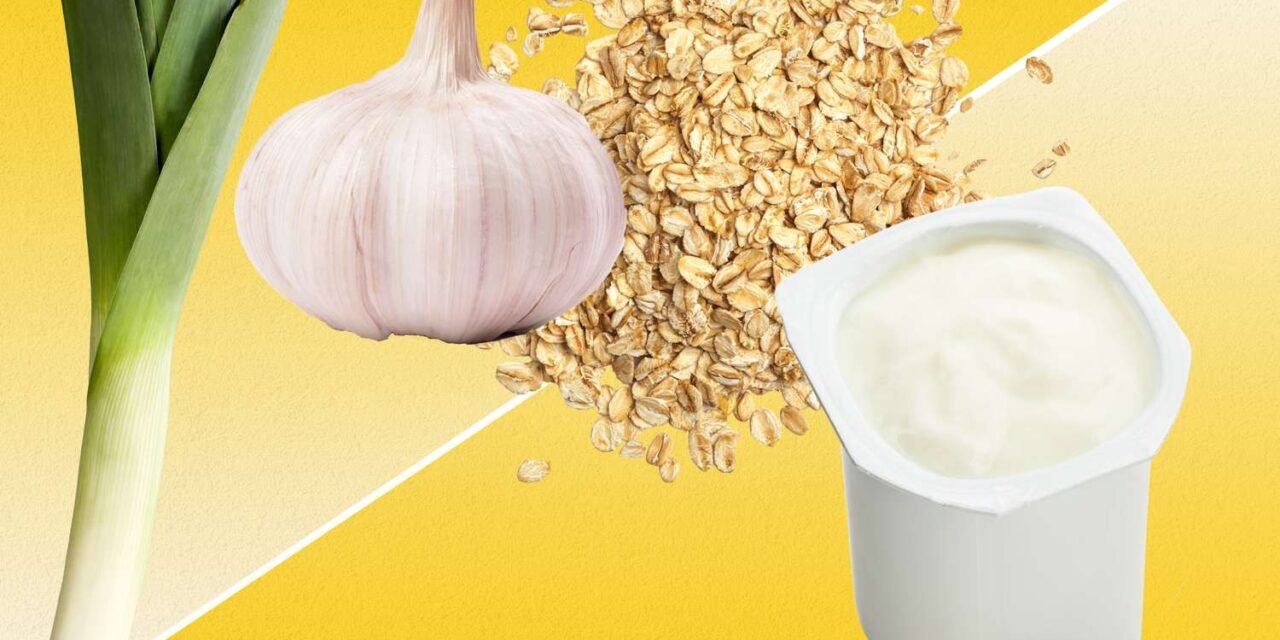
Each prebiotics and probiotics assist a happier, more healthy intestine. In the event you’re questioning which is healthier, prebiotics assist promote longer-term intestine well being. You will get prebiotics from oats, garlic, onions, leeks, asparagus and bran cereal.
Intestine well being has formally gone mainstream. Between January 2018 and October 2019 alone, greater than 830 articles on the subject have been printed within the U.S. and Canada. But, whereas many headlines hype the newest gut-health tendencies, few really break down the science behind them.
That’s the place we are available in. With intestine well being within the highlight, it looks like each complement model has a prebiotic or probiotic product it claims is important on your well-being. However what are prebiotics and probiotics—and is one any higher for you than the opposite?
To resolve these questions, we dug into the science to see which of those gut-health heroes reigns supreme. The reply may shock you.
Are Prebiotics or Probiotics Higher for Intestine Well being?
Each prebiotics and probiotics are essential for intestine well being, however prebiotics might supply extra long-term advantages. However earlier than we dive into that, it’s useful to know the variations between the 2. Probiotics are useful dwell microorganisms that, when consumed in adequate amount, present a well being profit to the host (that’s you). They’re often micro organism, however also can embody some sorts of yeast. Prebiotics, on the flip facet, are distinctive fibers that feed the nice micro organism that already reside in your intestine. So, principally, prebiotics are the gas that retains your good intestine micro organism blissful and wholesome.
“Each prebiotics and probiotics play an essential function in intestine well being, however I have a tendency to put a larger emphasis on prebiotics,” explains Kara Hochreiter, M.S., RDN, LD. “Whereas probiotic-rich meals present useful micro organism for the intestine microbiome, these microbes are transient, which means they move via the digestive tract reasonably than taking over long-term residence.”
“To not point out, supplementing with random probiotics doesn’t do a lot good until precisely which strains your physique really wants,” she says. “Once you eat a various, prebiotic-rich weight-reduction plan, you naturally create a wholesome and strong ecosystem that makes extra probiotic supplementation much less important.”
Advantages of Prebiotics
The attention-grabbing factor about prebiotics and probiotics is that they’re usually studied collectively. That makes it tough to tease out whether or not one is healthier than the opposite, since they will work collectively synergistically. Nonetheless, analysis does present that prebiotics have a number of fairly stellar benefits. After they attain your intestine, they enhance the manufacturing of useful compounds, known as short-chain fatty acids. As a result of SCFAs assist the intestine lining and immune system and scale back irritation, they maintain your intestine wholesome over the lengthy haul. Prebiotics additionally enhance stool consistency and regularity, selling bowel well being. If that weren’t sufficient, sure sorts of prebiotics, just like the beta-glucan fiber in oats, also can assist decrease ldl cholesterol.
“Prebiotics are foundational as a result of they improve the well being of your current microbiome,” says gut-health knowledgeable Jessie Wong, M.Acc., RDN, LD. “Nearly everybody can profit from steadily rising prebiotic-rich meals—particularly when mixed with common hydration, stress administration and motion.”
One of the best ways to reap the advantages prebiotics supply is by consuming all kinds of plant meals. Nonetheless, for those who’re on the lookout for the highest sources, suppose garlic, leeks, onions, Jerusalem artichokes, asparagus and bran cereal.
Advantages of Probiotics
Probiotics have a number of advantages, resembling easing a few of the signs of irritable bowel syndrome or offering safety from diarrhea whereas touring or after a course of antibiotics. However they aren’t one-size-fits-all. “The advantages of probiotics are strain-specific,” says Wong. “Which means one pressure may assist with bloating, whereas one other helps constipation—and others might do nothing in any respect and even make signs worse. That’s why deciding on a probiotic primarily based on advertising often doesn’t work.”
Whereas probiotics dietary supplements could also be flying off retailer cabinets, you will get these good-for-you micro organism from some meals, particularly yogurt and kefir. “These meals ship useful micro organism of their pure kind, together with further vitamins you gained’t discover in a capsule,” says Hochreiter. What about different fermented meals, like tempeh and miso? Whereas these might supply some well being advantages, they don’t present sufficient useful dwell micro organism to technically qualify as probiotics.
Different Methods to Assist Intestine Well being
Prioritizing intestine well being is essential to constructing and supporting a wholesome life-style for the lengthy haul. Whereas consuming a number of prebiotic- and probiotic-rich meals is a superb begin, these expert-backed methods can additional promote higher intestine well being.
Eat a Broad Number of Vegetation: A various, plant-rich consuming sample helps useful intestine bugs thrive! Vegetation are naturally filled with gut-healthy fiber. An excellent rule of thumb is to goal for 25 to 38 grams of fiber per day from quite a lot of greens, fruits, nuts, seeds, entire grains and legumes. In the event you’re new to the fiber practice, proceed slowly to cut back bloating, and you’ll want to drink a number of water to maintain issues transferring.
Sluggish Down: The way you eat is equally as essential to your intestine well being as what you’re consuming. Take time to sit down down and chew totally to permit your physique to digest and take in vitamins.
Keep Constant: Similar to a toddler, your microbiome loves rhythm and predictability. Deal with a constant consuming schedule, consuming meals at common instances every day. If potential, attempt to keep away from late-night consuming to assist higher digestion and promote sounder sleep.
Assist the Intestine-Mind Connection: Psychological stress, sleep high quality and bodily exercise can have an effect on the connection between your intestine and your mind. “Once you calm your nervous system, you calm your intestine,” says Wong. Deal with stress-management strategies that promote a well-rounded, centered you. Take into account deep, diaphragmatic respiration to cut back stress and enhance digestion. Attempt mild motion (like a 10-minute stroll) after meals to reinforce digestion. And don’t neglect these seven to 9 hours of nightly sleep for higher general well being and temper.
Our Skilled Take
Whereas probiotics could seem to reign supreme over prebiotics, gut-health specialists recommend this is probably not the correct hierarchy. Prebiotics feed the useful micro organism that already dwell in your intestine, serving to to construct a extra resilient microbiome. And also you don’t want a complement to get your fill. Specializing in prebiotic-rich meals, like oats, garlic, onions, leeks, asparagus and bran cereal, is a straightforward strategy to feed your intestine the prebiotics it wants to remain in tip-top form. Whilst you’re at it, don’t neglect so as to add in some probiotic-rich yogurt or kefir. Despite the fact that prebiotics might have a slight edge over probiotics, combining the 2 doubles your possibilities of gut-health success.
Supply hyperlink