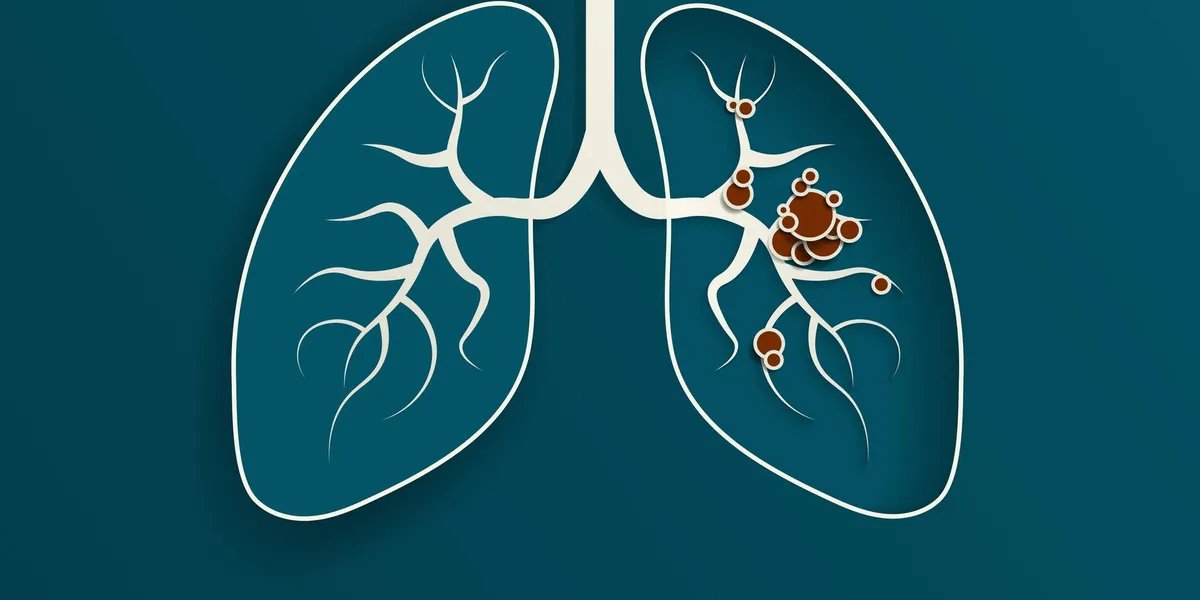
EspañolIf you’ve been identified with non-small cell lung most cancers (NSCLC), one of many first conversations to have along with your clinician ought to be about testing your tumor tissue for most cancers biomarkers. Biomarkers could be gene adjustments or excessive ranges of proteins which might be identified to trigger most cancers. They may give your clinician vital details about your most cancers, together with the way it would possibly reply to remedy.“In line with Nationwide Complete Most cancers Community tips, everybody with a stage 2 or larger lung most cancers ought to endure molecular testing,” mentioned David Tom Cooke, M.D., chief of normal thoracic surgical procedure at UC Davis Well being. “There are FDA-approved regimens that deal with the foremost genetic mutations concerned in lung most cancers and have been proven to enhance disease-free survival.”Cooke famous that not all folks with lung most cancers obtain preliminary biomarker testing as quickly as they’re identified, regardless of the rules being clear. “Don’t be afraid to ask your physician for testing earlier than any remedy begins,” he mentioned. “Simply politely say, ‘I want to have my tumor endure biomarker testing or next-generation sequencing.’”Biomarker testing requires solely small sampleLung most cancers is identified with a bronchoscopy, a minimally invasive process that lets your clinician look inside your lungs. The clinician will use a skinny tube with a lightweight and digicam on it. In the event that they see a mass of cells in your lungs, they are going to use tiny instruments to take a chunk of the tumor to ship to the lab.To do biomarker testing for lung most cancers, clinicians within the hospital lab will run assessments on the tumor pattern eliminated throughout your bronchoscopy. Ideally, your clinician will order next-generation sequencing, which makes use of one pattern to check for a lot of genetic mutations.In case your clinician wasn’t in a position to carry out a lung biopsy to take away tumor cells, some biomarkers can be recognized with a blood take a look at, known as a liquid biopsy. Your clinician will clarify extra about what they should full your biomarker testing.Lung most cancers biomarkersGenetic biomarkers typically happen as mutations on a number of of those genes:EGFR – The epidermal development issue receptor (EGFR) protein helps cells develop. Modifications, or mutations, within the EGFR gene, mostly EGFR exon 19 deletions or EGFR L858R mutations, can result in lung most cancers. These mutations inform clinicians what sort of change within the DNA occurred. EGFR mutations account for 10%–15% of circumstances of lung most cancers within the U.S. Individuals who develop EGFR-positive lung most cancers are most probably to be youthful never-smokers. Asian individuals are additionally extra prone to have EGFR mutations.ALK – The anaplastic lymphoma kinase (ALK) gene is energetic in people whereas they’re nonetheless within the womb, then normally shuts off earlier than delivery. In some folks, the ALK gene activates once more later in life and fuses with one other gene, which may result in most cancers. ALK mutations account for about 4% of lung cancers within the U.S. ROS1 – In ROS1-positive lung most cancers, the ROS1 gene has fused with one other gene, most frequently CD74, to trigger the most cancers. ROS1 gene adjustments happen in about 1%–2% of sufferers with lung most cancers and usually happen in adenocarcinomas. BRAF V600E – On this mutation of the BRAF gene, one amino acid will get switched out for one more. BRAF V600E-mutated cancers are most frequently seen in melanoma however may also happen in lung adenocarcinomas.NTRK – In a most cancers that assessments constructive for an NTRK (pronounced “en-trek”) gene fusion, a chunk of the NTRK gene fused with a chunk of one other gene. This mutation is comparatively uncommon in lung most cancers. NTRK fusions are additionally seen in breast and colorectal tumors, in addition to 20+ different tumor varieties.MET – Presently, two potential adjustments to the MET gene may cause lung most cancers. In MET exon 14 skipping, a mutation causes a particular a part of the gene to be eliminated. In MET gene amplification, there are too many copies of the gene.RET – The most typical mutation of the RET gene in lung most cancers is a fusion with one other gene. Any such mutation can be known as RET rearrangement.KRAS – The KRAS (pronounced “kay-ras”) gene helps management communication between cells. A G12C mutation of the KRAS gene is a frequent explanation for lung most cancers.HER2 – Human epidermal development issue receptor 2 (HER2) acts like an on/off swap for cells, very similar to EGFR. When HER2 is damaged, it will get caught within the “on” place and permits most cancers cells to develop. In lung most cancers, the HER2 gene can both have a mutation or too many copies. Your clinician can also check with HER2 as ERBB2. HER2 gene mutations additionally play a task in different forms of most cancers, together with breast most cancers.NRG1 – This mutation happens when two elements of a gene fuse collectively, resulting in irregular cell development and, typically, most cancers. NRG1 gene fusions are sometimes present in a subtype of NSCLC known as invasive mucinous adenocarcinoma.Protein biomarkers may help present data on whether or not the most cancers cells will reply to immunotherapy. Immunotherapy works by coaching the immune system to acknowledge and assault most cancers cells. PD-L1 – PD-L1 is protein that’s discovered on the floor of some cells. When most cancers cells have excessive ranges of PD-L1, they flip off immune cells that exist to battle illnesses, together with most cancers. PD-L1 blocks immunotherapy, however medication referred to as PD-L1 inhibitors stop that from occurring, enabling the immune system to destroy most cancers cells.TMB – Tumor mutational burden measures the variety of mutations inside a tumor. The mutations result in manufacturing of irregular proteins by the most cancers cells. Immunotherapy may fit in case your tumor has not less than one irregular protein that the immune system can acknowledge.Learn: Understanding the various kinds of lung most cancers >>Therapies for lung cancerCurrently, not less than one focused remedy exists to deal with every of those genetic mutations. “Focused therapies” are known as that as a result of they aim solely the particular cancer-causing protein in every tumor.One of the widespread class of focused remedy medication for lung most cancers are known as tyrosine kinase inhibitors (TKIs). Your clinician will select the proper TKI in your tumor sort, mutation, illness stage and any prior remedies.Focused therapies received’t work on individuals who don’t have the particular mutation every drug is designed to deal with. However folks with lung most cancers who don’t have any actionable genetic mutations could obtain chemotherapy and/or immunotherapy. Immune checkpoint inhibitors, a sort of immunotherapy, typically can be utilized to deal with folks whose tumors categorical excessive ranges of PD-L1 or excessive TMB.Lung most cancers stays a severe prognosis, however your clinician is extra possible than ever earlier than to have details about your tumor that they will use to develop the remedy that’s most probably to deal with your most cancers. And, on the subject of lung most cancers, data — and customized medication because of right this moment’s newest biomarkers — could make all of the distinction.This academic useful resource was created with assist from Daiichi.From Your Web site ArticlesRelated Articles Across the Net
Supply hyperlink
How Do Lung Most cancers Biomarkers Assist Information Remedy?